It’s no secret that life in schools has grown more complex. Students today face mounting pressures; academic, social, emotional; that can feel overwhelming, even for the most resilient kids.
Prevention is the name of the game, and evidence-based SEL interventions have become the gold standard for fostering well-being, improving behavior, and keeping students on track academically.
In the context of MTSS frameworks, these interventions have become essential. A solid SEL program includes teaching coping skills and managing classroom behavior, while also building layers of support that help educators identify student needs early and provide targeted, tiered solutions that actually work.
That’s the beauty of research-backed tools; they’re reliable, scalable, and flexible enough to fit diverse classrooms and districts.
And let’s be honest, it’s hard to ignore the value of choosing interventions that come with proof in their corner. When you’re juggling student referrals, team meetings, and a growing to-do list, knowing you’re implementing strategies that have been tested and refined can make all the difference.
In 2025, success starts with what works.
What Makes an SEL Program Evidence-Based
An evidence-based SEL program acts as a lifeline for schools committed to real results. What distinguishes these programs is their foundation in research. Think of rigorous studies like randomized controlled trials (RCTs) and other peer-reviewed research that support their effectiveness in improving outcomes like emotional regulation, behavior, and academic performance. Each solution has been tested in diverse school settings to ensure it works in the real world.
But research alone doesn’t cut it.
True evidence-based programs are built to be practical. They follow the SAFE framework, Sequenced, Active, Focused, and Explicit. That means students learn about SEL skills and actively practice them through structured activities and consistent reinforcement. For educators, this level of support represents a complete shift in how they approach student support.
Scalability also plays a huge role. The best programs integrate seamlessly into MTSS frameworks, with tools and strategies flexible enough to support a wide range of student needs.
And they don’t leave teachers or counselors to figure things out on their own. Comprehensive training, coaching, and ongoing resources ensure smooth implementation and long-term success.
Perhaps most importantly, evidence-based SEL programs deliver measurable outcomes. Clear benchmarks and progress tracking mean schools can see the impact, whether it’s fewer behavior referrals, improved peer relationships, or students showing up ready to learn.
Our Social Emotional Learning success story with Rock Falls ESD 13 illustrates these measurable outcomes in action.
At Satchel Pulse, we know how critical this is, which is why our platform is grounded in research and built for busy professionals. Checking a box doesn’t begin to capture the true goal; changing lives is always at the heart of our approach.
Proven SEL Interventions for Today’s Classrooms
1. Committee for Children Second Step (K–8 Digital Programs)
Key details
- Program Overview: Digital SEL lessons for K–8 to improve social and academic skills.
- Core Components: Grade-specific units, interactive digital content, and supports for educators.
- Evidence of Effectiveness: Linked to better motivation, behavior, and fewer suspensions.
Second Step® is a digital SEL program for K–8 students, created by Committee for Children to strengthen social-emotional skills while fostering a positive school environment. By addressing areas like self-management, problem-solving, and emotional regulation, the curriculum ensures students learn the tools they need to succeed in and out of the classroom.
Each grade level features targeted lessons delivered through interactive digital content and engaging activities, making the material accessible and meaningful for students.
Educators benefit from tiered supports, an Implementation Guide, and usage dashboards, which streamline implementation and provide actionable insights. The program also integrates seamlessly with MTSS and PBIS frameworks, supporting trauma-informed practices and whole-school alignment.
Research highlights its effectiveness: published studies document significant reductions in office disciplinary referrals and suspensions, with students showing measurable gains in social-emotional competencies.
With proven behavioral improvements and enhanced school climate outcomes, Second Step® consistently delivers measurable impact, supporting schools in creating lasting change.
2. Yale Center for Emotional Intelligence RULER
Key details
- Program Overview: Systemic SEL approach building emotional intelligence in PreK–12 schools.
- Core Components: Focuses on emotional skills using tools like the Mood Meter and Charter.
- Evidence of Effectiveness: Research shows gains in academics, social skills, and school climate.
RULER, developed by the Yale Center for Emotional Intelligence, is an evidence-based SEL program built for PreK–12 students. Its primary goal is to embed emotional intelligence into classrooms, equipping students with the tools to better recognize, understand, label, express, and regulate their emotions. By doing so, it fosters both personal growth and academic success.
At the heart of RULER are four tools: the Charter, Mood Meter, Meta-Moment, and Blueprint. Each works to help students and educators build emotional awareness, improve decision-making, and enhance relationships.
For example, the Mood Meter encourages students to identify and articulate their emotions, building self-awareness in a structured way.
Research demonstrates its effectiveness. Schools using RULER report improved academic performance, better social skills, and a more positive school climate.
There’s also a notable reduction in anxiety and improved behavioral outcomes, making RULER a powerful tool for holistic student development.
3. Positive Action (PreK–12)
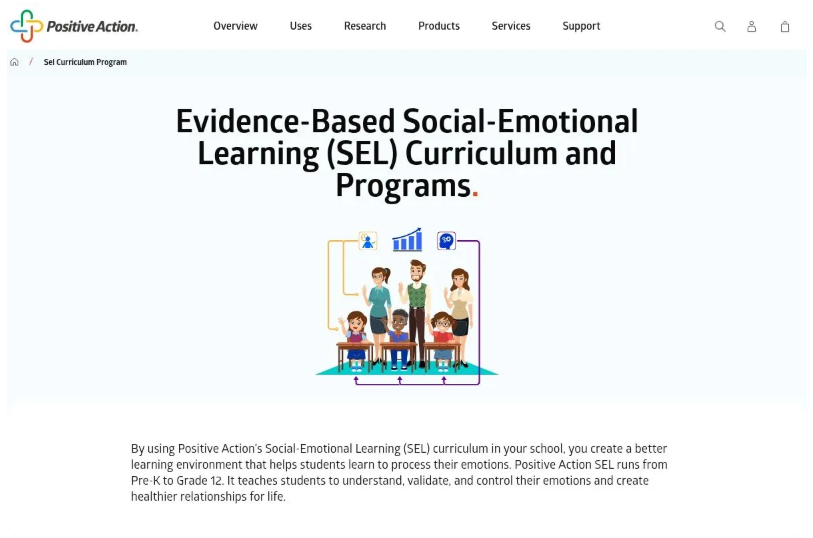
Key details
- Program Overview: Comprehensive SEL for PreK–12 emphasizing positive actions and well-being.
- Core Components: Grade-level lessons, role-play, and schoolwide climate activities.
- Evidence of Effectiveness: Boosts achievement and social-emotional growth; reduces problem behaviors.
Positive Action brings a holistic approach to SEL, offering a comprehensive program for PreK–12 students focused on building social-emotional skills, improving behavior, and boosting academic success. By encouraging positive actions for oneself, others, and the community, it aims to enhance overall well-being.
The program includes grade-specific lessons that address self-concept, self-regulation, and social interactions, using engaging methods like role-playing, songs, games, and journaling.
Beyond the classroom, it extends its impact through school-wide initiatives and family engagement resources, ensuring consistent reinforcement across environments.
Research backs its effectiveness. For instance, schools implementing Positive Action have reported higher academic achievement, reductions in bullying and substance use, and improved student relationships.
This combination of evidence-based practices and practical tools makes it an effective option for fostering a positive school climate.
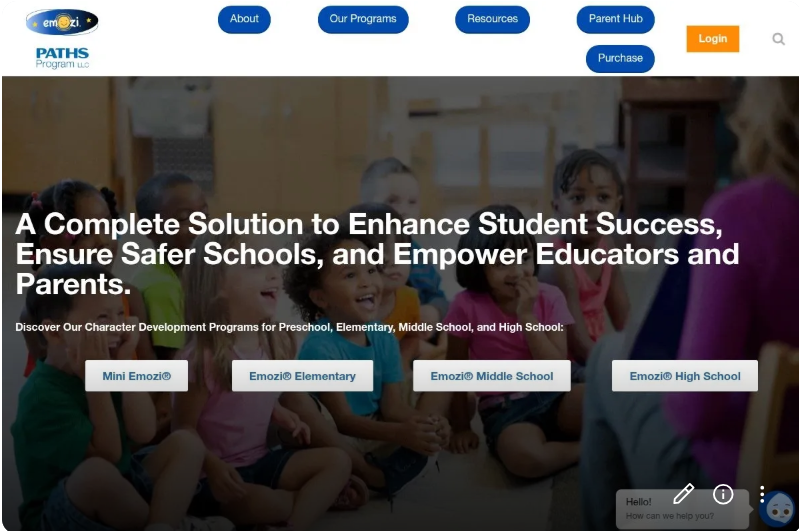
4. PATHS Program — PATHS (Promoting Alternative THinking Strategies
Key details
- Program Overview: SEL curriculum for preschool–6th grade targeting emotional and social skills.
- Core Components: Focuses on self-control, peer relations, and problem-solving with scripted lessons.
- Evidence of Effectiveness: Noted for reducing aggression and improving self-control and emotion vocabulary.
The PATHS (Promoting Alternative THinking Strategies) program is a classroom-based SEL curriculum for students in preschool through sixth grade. It helps young learners develop skills to navigate emotions, build better relationships, and solve problems effectively.
By focusing on self-control, emotional literacy, and positive peer interactions, PATHS promotes a foundation for healthier behavior and social success.
Lessons are delivered two to three times a week in short, engaging sessions that incorporate role-playing and storytelling. These methods make abstract concepts tangible for kids, helping them practice and internalize skills in real time.
The program also emphasizes home-school connections, reinforcing learning across environments.
Research supports its impact. Studies show meaningful reductions in teacher-reported aggressive behavior and notable improvements in emotional understanding and self-control.
Though academic effects remain mixed, its focus on fostering social-emotional well-being makes it a valuable tool for early intervention.
5. Lions Quest Skills for Adolescence
Key details
- Program Overview: Middle school SEL program promoting positive behavior and social skills.
- Core Components: Includes thematic units, service projects, and a whole-school engagement model.
- Evidence of Effectiveness: Shown to lower substance use and increase school engagement.
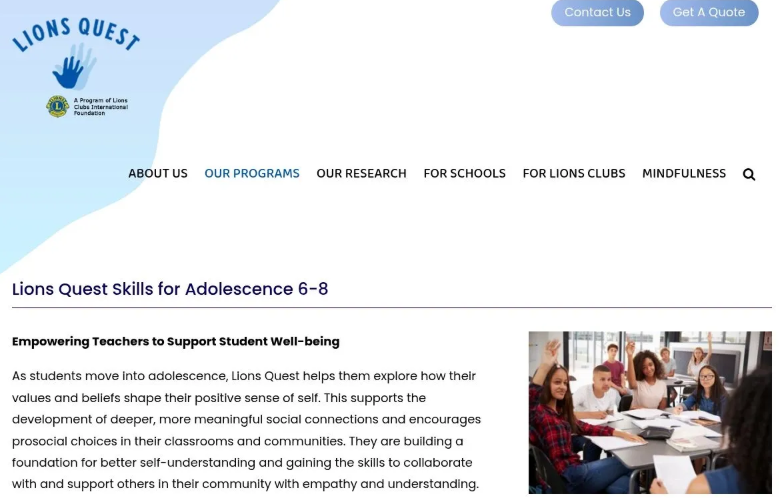
Lions Quest Skills for Adolescence (LQSFA) is a structured SEL program for students aged 11 to 14, it focuses on building self-confidence, managing emotions, fostering healthy peer relationships, and making positive life choices.
The program’s overarching goal is to enhance social-emotional skills while reducing harmful behaviors like substance use and violence.
Over nine months, students engage in 36 lessons organized into six thematic units; these lessons incorporate group discussions, role-playing, self-reflection, and service-learning projects, reinforcing practical skills in real-world contexts.
LQSFA features a whole-school approach, involving students, teachers, parents, and community members working together to create a consistent, supportive environment for skill development.
Research highlights its effectiveness, U.S.-based randomized controlled trials show that LQSFA participants experienced reduced drug and alcohol use, with long-term benefits lasting two years.
Other studies, such as one in Norway, found increased school engagement and improved social skills, making LQSFA a valuable option for adolescent SEL.
Choosing the Right SEL Approach for Your Students
Choosing the right SEL program can feel like navigating a maze. There are so many options, each claiming to be the best fit for your students. What works for one school, or even one classroom, might not work for another.
Start by thinking about your students’ ages. SEL programs like Positive Action are built with development in mind, offering grade-appropriate lessons for students from Pre-K through Grade 12. That means the activities and language evolve with the learners, ensuring relevance and engagement.
Next, consider how much time you can realistically dedicate to SEL. Some programs, like Student Success Skills, have specific session requirements; five 45-minute weekly lessons for middle and high schoolers, and five to eight 30-minute sessions for elementary students. Knowing these parameters upfront helps you plan accordingly.
Training is another big one.
Let’s face it, implementing any new program takes time, and you’ll want to be sure your team feels confident from the start. Programs like SSS require a standard professional development workshop to ensure proper implementation, while others might have even more extensive training demands. Be sure to weigh your team’s capacity.
Think about your students’ unique needs. SEL works best when it reflects the cultural, social, and even academic realities of your school. For instance, Positive Action offers structured lessons that address physical, intellectual, social, and emotional development, making it adaptable for diverse student populations.
The right choice means finding a program that fits seamlessly into your school culture while truly meeting the needs of your students.
The Impact of SEL on Student Success
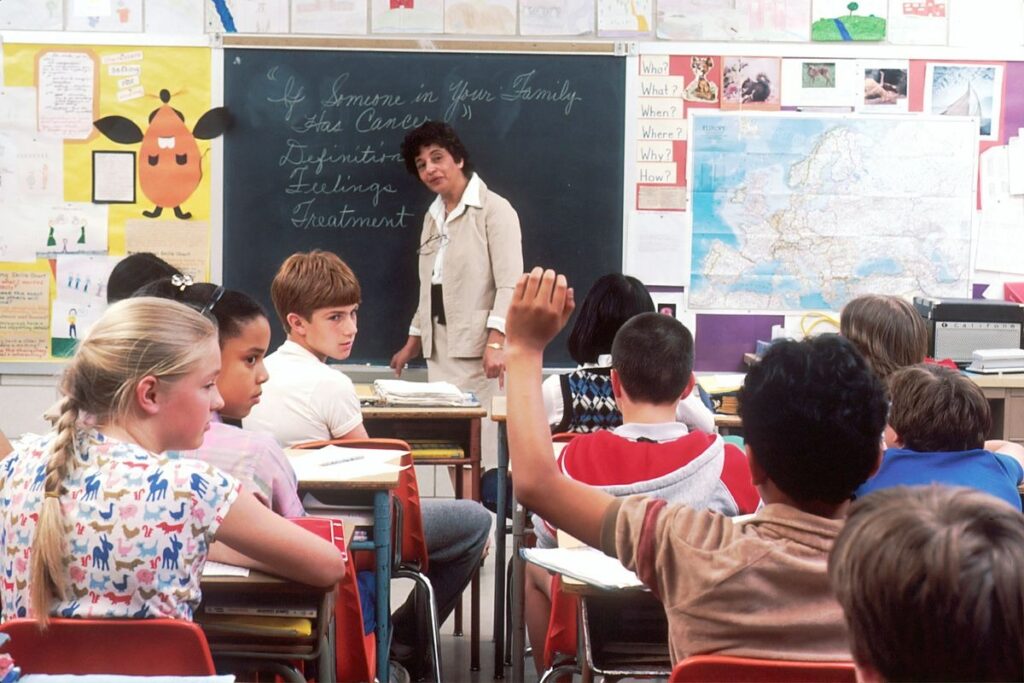
When it comes down to it, evidence-based SEL interventions work as both strategies and investments in student success. Programs like Second Step, RULER, Positive Action, PATHS, and Lions Quest show us what’s possible when SEL is done right. They help students strengthen core social-emotional skills like emotional regulation, decision-making, and self-awareness while improving behavior, academic outcomes, and even school climate.
The research doesn’t lie. These programs have been shown to reduce risky behaviors, internalizing symptoms like anxiety, and even school disruptions.
At the same time, they boost positive peer relationships, foster resilience, and nurture a sense of belonging in schools. In the long term, students equipped with SEL skills carry them into adulthood, leading to better mental health, stronger relationships, and greater employability.
But the impact reaches beyond individual students. Entire schools benefit from fewer behavior incidents, more engaged learners, and a more inclusive, supportive environment.
SEL lays the groundwork for sustainable, systemic change.
Because at the end of the day, SEL is about transforming lives.